Introduction & Florida LLC Appeal
Florida, often referred to as the Sunshine State, is one of the most popular jurisdictions in the United States for registering a new business. As the third most populous state in the US with a gross domestic product (GDP) exceeding $1 trillion, Florida boasts a vibrant, pro-business economic climate. For domestic startups and international e-commerce founders alike, launching a Florida Limited Liability Company (LLC) offers a compelling combination of tax advantages, flexible legal frameworks, and direct access to major financial markets.
However, choosing the right state of formation is not a one-size-fits-all decision. While Wyoming and Delaware are frequently praised for their low annual maintenance costs and strict asset privacy, Florida presents a unique set of benefits and trade-offs. Entrepreneurs must carefully analyze the state's specific laws, tax systems, filing schedules, and public disclosure requirements before committing to a Florida registration.
In this comprehensive guide, we provide an exhaustive, data-driven analysis of forming an LLC in Florida. We explore the legal advantages, hidden costs, mandatory filing deadlines, and comparison points against other popular states to help you determine if Florida is the optimal home for your enterprise.
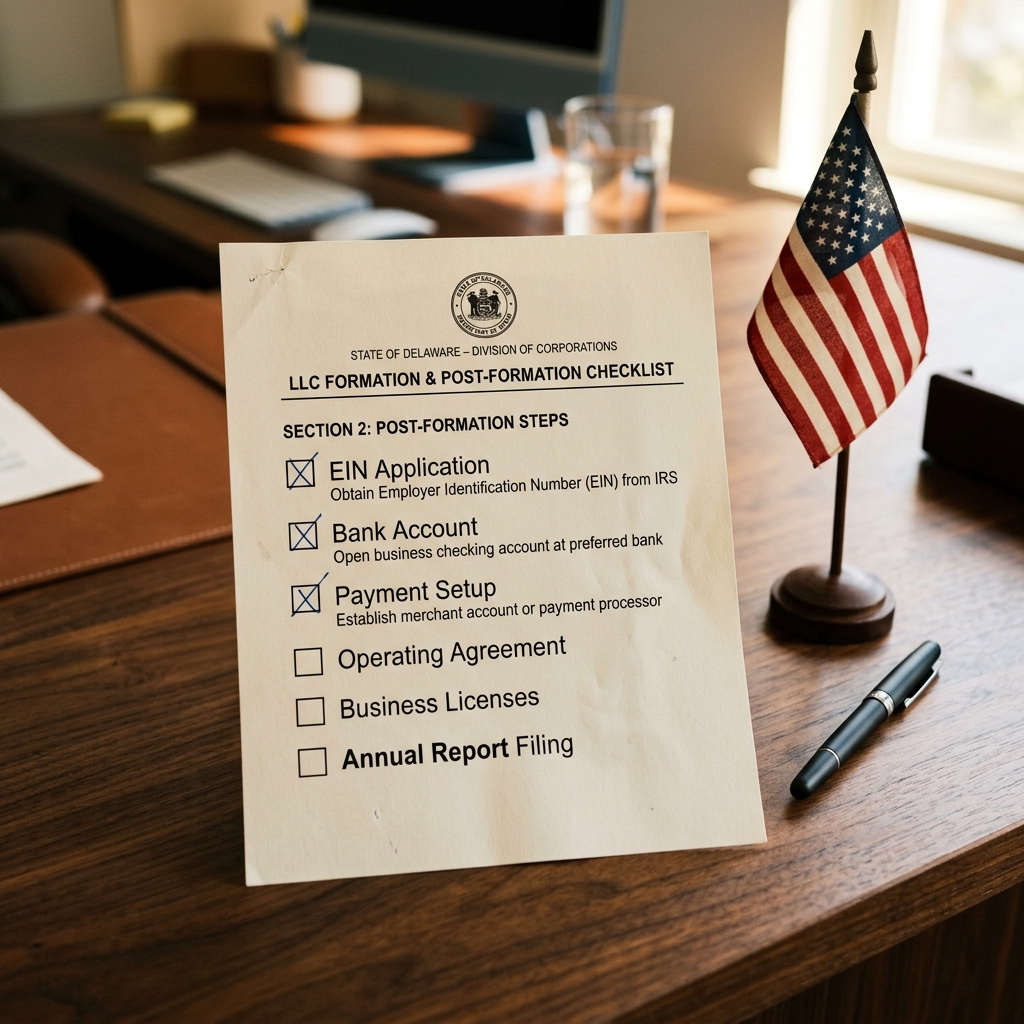 Florida's massive economy and banking hubs make it a premium choice for e-commerce and trading LLCs.
Advantages of Florida LLC for Founders
A Florida LLC provides several key advantages that make it highly competitive for global trade, retail e-commerce, and regional business operations:
Pass-Through Taxation with Zero Personal Income Tax
Florida is one of a handful of US states that does not impose a personal state income tax. Since an LLC is classified as a pass-through entity by default, the company's profits flow directly to the owners' personal tax returns. At the state level, these profits are subject to a 0% individual income tax rate. This results in significant tax savings compared to states like California, New York, or Illinois, which impose high individual tax rates on pass-through business income.
No State Corporate Income Tax for Single-Member LLCs
Under Florida tax statutes, corporate income taxes are only applied to entities taxed as Corporations (C-Corps) or LLCs that have explicitly elected to be treated as Corporations for tax purposes. For standard single-member LLCs (disregarded entities) or multi-member LLCs (partnerships), there is no state-level corporate income tax applied to the entity's earnings.
Charging Order Protection and Strong Asset Shielding
Florida law offers robust asset protection for multi-member LLCs. Under Florida Statute § 605.0503, the primary remedy for a personal creditor of an LLC member is a "charging order." This court order only grants the creditor the right to receive any distributions that would normally go to that member, but it does not allow the creditor to seize control of the company, force a liquidation of assets, or acquire voting rights. This legal shield protects the business and the other members from the personal liabilities of a single owner.
Favorable Climate for E-Commerce and Payment Gateways
Florida business addresses are widely recognized and accepted by major US commercial banks and merchant processors like Stripe and PayPal. Establishing a Florida address avoids many of the risk flags automated compliance systems place on addresses in states known primarily as filing shells, leading to smoother bank account approvals and merchant verification processes.
Drawbacks and Compliance Challenges
While the advantages of a Florida LLC are substantial, founders must also be aware of the state's distinct compliance challenges, public record rules, and financial penalties:
Lack of Asset Privacy on Public Records
Unlike Wyoming, Delaware, and New Mexico—which allow members and managers of LLCs to remain completely anonymous—Florida requires full public disclosure. When filing your Articles of Organization and annual reports, you must list the names and addresses of the LLC's managers or authorized members. This information is indexed on the state's public registry (Sunbiz), making it easily searchable by the public, solicitors, and creditors. If privacy is your primary goal, Florida may not be the right choice.
Higher Annual Maintenance and Report Fees
Florida LLCs are subject to higher ongoing state fees than many other popular jurisdictions. The state filing fee for a Florida LLC Annual Report is $138.75. In comparison, New Mexico has a $0 annual report fee, and Wyoming's annual license tax starts at $60. Over several years, these fee differences accumulate.
Extremely Punitive Late Filing Penalties
Florida enforces some of the strictest deadline penalties in the country. The annual report for a Florida LLC is due by May 1st of every calendar year. If you file even one day late (on May 2nd), the state imposes a mandatory, non-negotiable $400 late fee. If the report and fee are not submitted by the third Friday of September, the state will administratively dissolve your LLC, requiring a $100 reinstatement fee along with all back-fees to restore operations.
Comprehensive Fee Breakdown and Deadlines
To avoid compliance failures and late fees, you must understand the financial commitments required to establish and maintain a Florida LLC. The following table provides an exhaustive breakdown of all official state fees and filing deadlines:
| Filing Type / Fee Category | Official State Fee | Mandatory Due Date / Deadline | Penalty for Non-Compliance |
|---|---|---|---|
| Articles of Organization | $125.00 (Includes Registered Agent designation fee) | One-time filing at formation | LLC is not created until filed and approved |
| Annual Report Filing | $138.75 | May 1st of every year (starting the year after formation) | Mandatory $400.00 late fee applied on May 2nd |
| Registered Agent Change | $25.00 | File at the time of changing agents | Old agent remains legally liable until filed |
| Articles of Amendment | $25.00 | File when updating LLC name or membership structure | Registry records will remain inaccurate |
| Administrative Reinstatement | $100.00 (Plus all outstanding annual report and late fees) | File after administrative dissolution by the state | Company remains dissolved and cannot legally operate |
| Certificate of Status (Good Standing) | $5.00 | Optional (Requested when opening bank accounts) | None (Requested on demand) |
All filings and payments must be processed online through the official Florida Division of Corporations portal, Sunbiz.org. It is critical to calendar the May 1st deadline to prevent the $400 late fee.
E-commerce & Stripe Integration in Florida
For digital entrepreneurs and e-commerce sellers, Florida is an exceptional state for establishing payment processing networks. E-commerce platforms like Shopify, Amazon Central, Stripe, and PayPal have strict KYC compliance rules, and they verify your business address, EIN, and bank accounts.
Here is why Florida LLCs integrate smoothly with payment systems:
No Post Office Box Restrictions for Banks
US digital banks (like Mercury and Wise) and traditional retail banks require a physical address to open business accounts. While they reject standard P.O. Box addresses, they accept Florida virtual business addresses that provide a physical street layout and suite numbers. Because Florida has a massive, active commercial real estate sector, these addresses pass automated bank compliance checks easily.
Sales Tax and Nexus for E-commerce Sellers
If you run an e-commerce business in Florida, you must register for a Florida Sales Tax Permit if you have a physical presence or economic nexus in the state. However, under the Marketplace Facilitator laws, platforms like Amazon, eBay, and Etsy collect and remit sales taxes on your behalf for transactions occurring on their platforms, simplifying your sales tax reporting burdens.
Special Florida Guide for International Owners
For international founders who do not live in the United States, forming a Florida LLC is a popular way to access the US market. However, operating a Florida entity from abroad requires specific compliance setups:
- Hiring a Registered Agent is Mandatory: Since you do not reside in Florida, you must hire a professional registered agent with a physical office in the state to receive legal mail during business hours.
- Federal IRS Filings (Form 5472 & Form 1120): If your Florida LLC is 100% owned by a non-US resident, it is classified as a foreign-owned disregarded entity. You must file Form 5472 and a pro-forma Form 1120 with the IRS every year, reporting transactions between the LLC and the owner. Failure to file these informational reports carries a mandatory IRS penalty of $25,000.
- Address Formatting: Ensure your virtual address provider formats your Florida address properly (e.g., 123 Florida Ave, Suite 100, Miami, FL 33130). Do not use the term "P.O. Box" or "Box Number" when applying for your EIN or opening business bank accounts.
By leveraging professional filing services, international owners can establish a reputable Florida business structure without ever visiting the US or obtaining a personal SSN/ITIN.
Frequently Asked Questions & Expert Guidance
What is the annual report fee for a Florida LLC and when is it due? ▼
The annual report fee for a Florida LLC is $138.75. It is due by May 1st of every calendar year, beginning the year after your LLC is formed. For example, if you form your LLC on November 15, 2025, your first annual report is due by May 1, 2026.
What happens if I file my Florida LLC annual report late? ▼
If you file your annual report even one day late (on or after May 2nd), the state of Florida imposes a mandatory, non-negotiable $400 late fee. The state will not waive this fee for any reason. If you do not file by the third Friday of September, the state will administratively dissolve your LLC.
Can I keep my name off the public records in a Florida LLC? ▼
No. Florida does not allow anonymous LLCs. The names and business addresses of all members and managers must be listed on your Articles of Organization and annual reports. This information is published on the Sunbiz public database. If you require complete anonymity, you should consider forming your LLC in Wyoming, New Mexico, or Delaware.
Does Florida have a state income tax for LLCs? ▼
Florida does not impose a personal state income tax. Because standard LLCs are pass-through entities, their profits flow to the owners' personal tax returns and are subject to a 0% state income tax rate. Florida does have a corporate income tax of 5.5%, but this only applies to C-Corporations or LLCs that have elected corporate tax status.
Do I need a registered agent for my Florida LLC? ▼
Yes. Florida law requires all corporate entities to maintain a registered agent with a physical street address within the state. The agent must be open during regular business hours to accept service of process and official state mail on behalf of the LLC. Post office boxes or virtual mailboxes cannot be listed as the registered office.
Can a non-US resident open a Florida LLC? ▼
Yes. Non-US residents can form and own a Florida LLC 100% remotely. There are no citizenship or residency requirements. You will need to hire a Florida registered agent, obtain a virtual business address, and apply for an EIN (Tax ID) using Form SS-4. You do not need a US Social Security Number or ITIN to complete the process.
What is Sunbiz? ▼
Sunbiz (Sunbiz.org) is the official online portal operated by the Division of Corporations of the Florida Department of State. It is the central registry where all Florida business filings, Articles of Organization, annual reports, amendments, and corporate search databases are managed.
How do I dissolve a Florida LLC? ▼
To legally close your business, you must file Articles of Dissolution with the Florida Division of Corporations and pay a filing fee of $25. Dissolving your LLC ensures that you are no longer liable for annual reports or penalty fees. All business taxes must be settled before filing for dissolution.